



Teach Your Kids Critical Thinking
Our interactive courses, worksheets, and lesson plans help kids develop the skills to communicate clearly, think logically, and make well-informed decisions.

What is critical thinking?
Critical thinking is careful thinking. It involves pausing to question our assumptions, notice our biases, and weigh evidence before drawing conclusions. It helps us make better sense of the world.

Why should kids learn critical thinking?
Critical thinking is not a default habit. It’s a skill that takes practice. Teaching it early helps children develop good thinking habits before unhelpful ones become more ingrained.

Why teach with stories?
Stories make critical thinking topics more concrete, relatable and memorable for children. Plus they’re fun! That’s why story-based learning and interactive adventures are a key part of many Critikid courses.

Worksheets & Lesson Plans
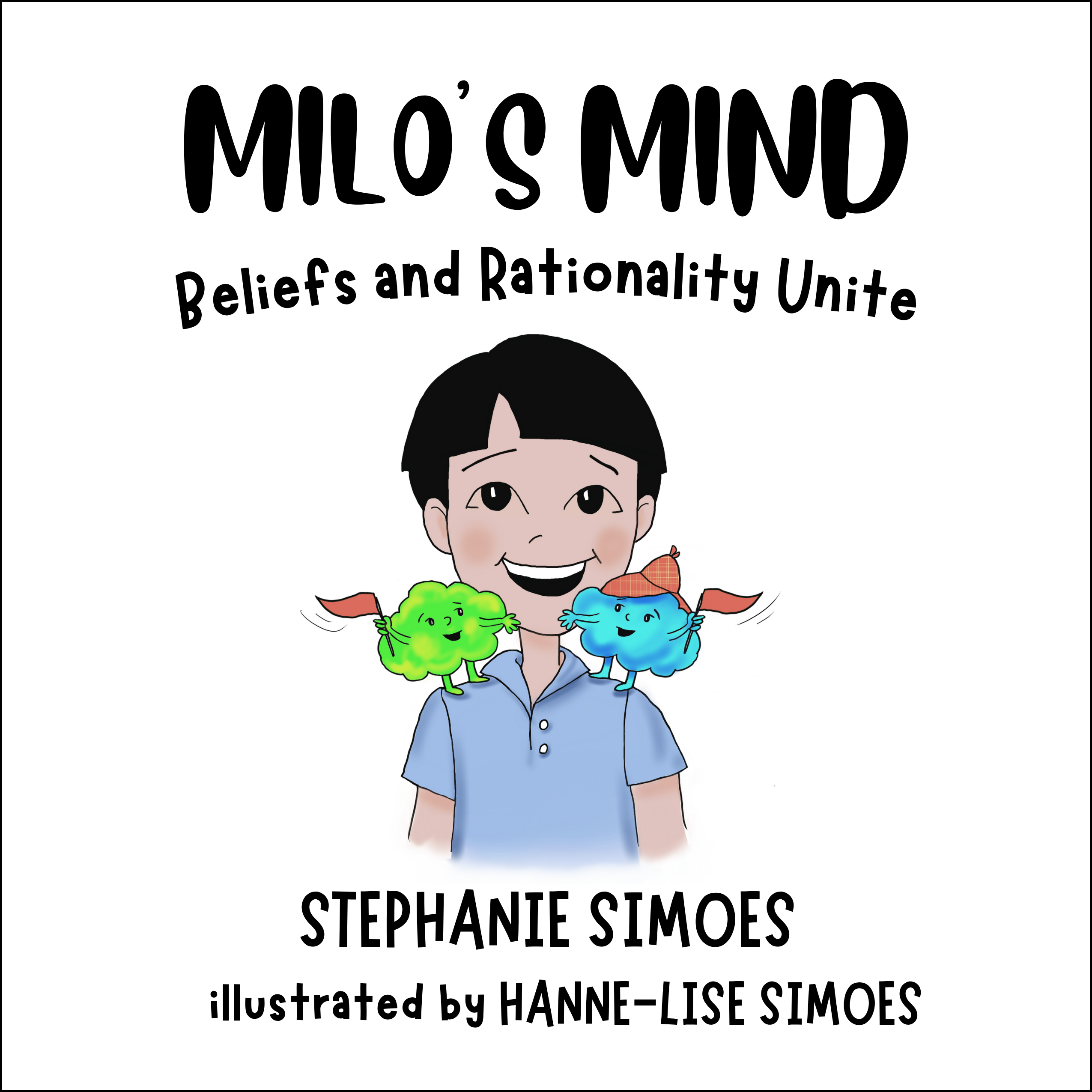
Milo's Mind - The Book
Milo’s mind is full of BELIEFS—but not all of them are true. Luckily, he has a helpful guide: RATIONALITY, a detective who helps him ask questions and search for evidence.
In this picture book for kids ages 6-9, young readers will discover how critical thinking, curiosity, and the courage to rethink what you believe can turn you into a real-life superhero.
Education Website
— Liliana for Fallacy Detectors★★★★★I've been doing this myself as an adult and I find them easy to understand and entertaining. My eldest child, (8y.o.) started watching with me and said that she wanted me to wait for her to watch together because the episodes were fun and interesting. Now all four of us at home are watching these episodes and discussing the fallacies together. Highly recommend!
— Jessica A. for Fallacy Detectors★★★★★This was so easy to comprehend for my child and was so engaging both us parents did it together with him. It took us by surprise how much he enjoyed it and how eager he was to point out fallacies through the coming weeks after. I highly recommend this and look forward to more content.
— Megan, parent for Fallacy Detectors★★★★★My 8 year old son LOVED [Fallacy Detectors] part 1 and had so much fun doing the quizzes! I also had a great time watching it and talking about it.
— Adèle, 9 for Fallacy Detectors★★★★★I learned about different types of fallacies which help me to identify them when having a conversation. I've been able to identify LOADS of circular reasoning!
— Anonymous for Fallacy Detectors★★★★★The videos are great! They're fun, engaging, and in just a few days, my son is understanding logical fallacies so much better than he was before, after like a year of lessons!
— Nino, parent for Fallacy Detectors★★★★★[My daughter] followed the entire Fallacy Detector Part 1 and immediately asked to do the other classes as well ... we had a very long discussion about what she learned over dinner.
— Arline for Printable Logic Puzzle Cards★★★★★These have been a great addition to our homeschool days. My teens and tween have really enjoyed trying to figure them out.
— Ben, 15 for Fallacy Detectors★★★★★Critikid is an all-around great tool for children and teens who want to develop their analytical skills.
— Dr Amy for Fallacy Detectors★★★★★I did this course to assess critical thinking content for kids, as I feel it is sorely lacking generally in school curricular and may be one of the reasons for globally low science and health literacy levels. After completing this course, I realised that even adults would actually even benefit from it. I am sure there...
— Kiron for A Statistical Odyssey★★★★★I am a university teacher and I am trained in statistics...and my score was not perfect :) I loved the course, learned from it, and am recommending it to others (many who are not kids) Keep up the good work and hope to see more such content! Perhaps a Statistical Odyssey for Managers
— Denali for A Statistical Odyssey★★★★★What a fun way to learn statistics!
— Krzyftosz for A Statistical Odyssey★★★★★It was a cool little text adventure game. Perhaps it would benefit from some kind of branching in the story that would lead to dead ends or some humorous absurd consequences that could be rewinded back? Not sure if that would help or hinder the learning though, but could be funny 😊
— Theo Dawson for A Statistical Odyssey★★★★★I'm a college student and am interested in using these resources in k-12 classrooms, but decided to give it a try myself first, and it was great! Even my parents and I, with multiple college and graduate degrees between us, had to actively think about many of the problems. Although I think that the target demographic...
— Clinton Laird for Fallacy Detectors★★★★★I am exploring critical learning techniques for young students and am curious about the structure used.....seems consistency in delivery is important.....better for comprehension and less confusion or digression. when complete all your modules, could be have a phone conversation?
— Gleb for Emotional Intelligence★★★★★I've tried emotional intelligence course with my son. We made in 2 days, I liked it, it is not a solution but more like a path to discovery how to identify and control emotions. I recall it several time when my son loose his temper.
— Tessa, 9 for Fallacy Detectors★★★★★I always like doing math and puzzles, but The Fallacy Detectors was extra fun. And I spotted a fallacy in a book the other day!
— Tiffany F. for Fallacy Detectors★★★★★Fallacy Detectors has provided so much clarity for my child; he's had the best time running around using his newfound understanding of logical fallacies.
— Aylin, 17 for Logic for Teens★★★★★[Logic for Teens] was a more fun and relaxed introduction to logic than I had with truth tables. The final quizzes were probably my favourite bit, because it leaned hard into the theme and I loved that. The progression from very easy to start to a bit harder at the end was smooth. There weren't any points where I felt I had to use what I knew outside of the course to solve it. I had a lot of fun. It brought back some of my old days on PBS games. Hugely well done!
— Elaine F. for Emotional Intelligence★★★★★[My granddaughter] was very invested in getting all the answers correct. I think that the most interesting part was the stories of the children feeling different emotions, and letting the participants decide what they could do to help with the feeling. When I asked her what strategy she was most likely to use from...
— Paul V. for Social Media Simulator★★★★★I'm working though the pages with my grade 5 class and they are having a great time trying to figure out the problems and logical fallacies in the posts. I love that it's a safe place to explore how misinformation is often presented in social media and since it's so fun, my students are learning in a meaningful way! I highly recommend this resource to teachers and parents everywhere!
— John Furr for Social Media Simulator★★★★★I love this. You've gamified critical thinking in a way that's not just smart, it's essential. If we're going to raise a generation capable of surviving algorithmic manipulation and misinformation pandemics, this is exactly the kind of tool they need.
— Rifki for Social Media Simulator★★★★★Over two nights, [my sons and I] went through 8 lessons, and they loved it. They are 16 and 17, so they were more likely to hit on the right answers, but they loved the idea that this exists. And they weren't just humouring me. They really saw this as something valuable to work through. You hit upon something bitesize that could really be an excellent tool in the fight against misinformation. It's amazing and it's worth it.
— Advit Malhotra for Emotional Intelligence★★★★★I loved it i think everyone should do this
Critikid’s Story
My name is Stephanie Simoes. While teaching kids facts helps protect them from being misled, we can't teach facts fast enough to combat the constant stream of misinformation they face. I believe children need to develop critical thinking tools to rationally evaluate the claims they encounter every day and to notice how their biases shape their understanding of them.
I started teaching critical thinking to my students and learned that kids not only understood the topics—they loved learning about them! I struggled to find critical thinking resources to help me, so I decided to made my own. That’s why I started Critikid. This is a small, bootstrapped family project.
Critikid’s Mission
Critikid's goal is to give kids and teens the skills they need to rationally think about and discuss controversial issues without telling them the conclusions they should draw. Critikid's resources teach kids how to think, not what to think.
Read more about Critikid.
What is critical thinking?
Critical thinking is slow, careful thinking. It is the process of pausing to question our assumptions, check our biases, and weigh evidence before accepting a claim or making a decision. It helps us rationally analyze information, arguments, and even our own thought processes.
What are the building blocks of critical thinking?
The following skills help people of all ages to think critically:
Recognizing logical fallacies – Logical fallacies are common reasoning errors that weaken arguments. Learning to recognize them—both in other people’s words and in our own thoughts—keeps discussions productive and clear.
Information, data, and science literacy – Facts and figures can be presented in misleading ways. Knowing how to analyze data guards us against incomplete truths.
Intellectual humility – Acknowledging that we don't know everything and that we might be wrong opens the door to learning and healthy skepticism.
Emotional intelligence – Being able to understand and manage our feelings helps us think more clearly when stakes (or tempers) are high.
Why is critical thinking important?
Critical thinking helps us to:
Communicate clearly: Logical fallacies can derail conversation. When we can identify and respond to them, we can steer conversations back on track.
Make better decisions: Critical thinking helps us recognize when our biases and assumptions are impacting our decision-making. By slowing down, we can better judge risks and rewards, compare short‑ and long‑term consequences, and choose the path that will help us reach our goals.
Defend ourselves against manipulation: Advertisers, scammers, and influencers can exploit people's biases and use logical fallacies to persuade people to buy things or accept ideas. Critical thinking makes their tricks easier to spot and ignore.
Why teach kids critical thinking to kids?
Our brains love shortcuts. Left on autopilot, we tend to accept the first explanation that feels intuitively right. Slow, careful thinking is not our default—it’s a skill that takes practice, just like reading or riding a bike. That’s why kids need explicit lessons in critical thinking.
This applies to people of all ages, but starting early is best because it:
Builds good habits before bad ones set in – It’s easier to learn pause and question now than to unlearn snap-judgments later.
Turns kids' natural curiosity into competence – Kids already ask “why.” Critical thinking education shows them how to test explanations, not just collect them.
Normalizes intellectual humility – Kids should grow up knowing that not having all the answers is normal and changing your mind when you get new evidence is a strength.
At what age should kids start learning critical thinking?
Children can do activities to develop their critical thinking skills even before they can talk. A toy that lights up when a button is pressed teaches cause and effect, peek-a-boo teaches object permanence, and nesting toys help develop problem-solving skills. Once kids can talk, they can start to do simple experiments. For example, you can ask, “What do you think will happen when you mix the red and yellow paint?” The child can make a hypothesis and test it by mixing the paints.
For more practical ideas on how to teach critical thinking at home, read Critical Thinking for Kids.
Critikid currently offers critical thinking courses for kids ages 5 and up:
- 5-8: Emotional Intelligence
- 8-12: Fallacy Detectors
- 9+: Social Media Simulator
- 12+: A Statistical Odyssey
- 13+: Symbolic Logic for Teens